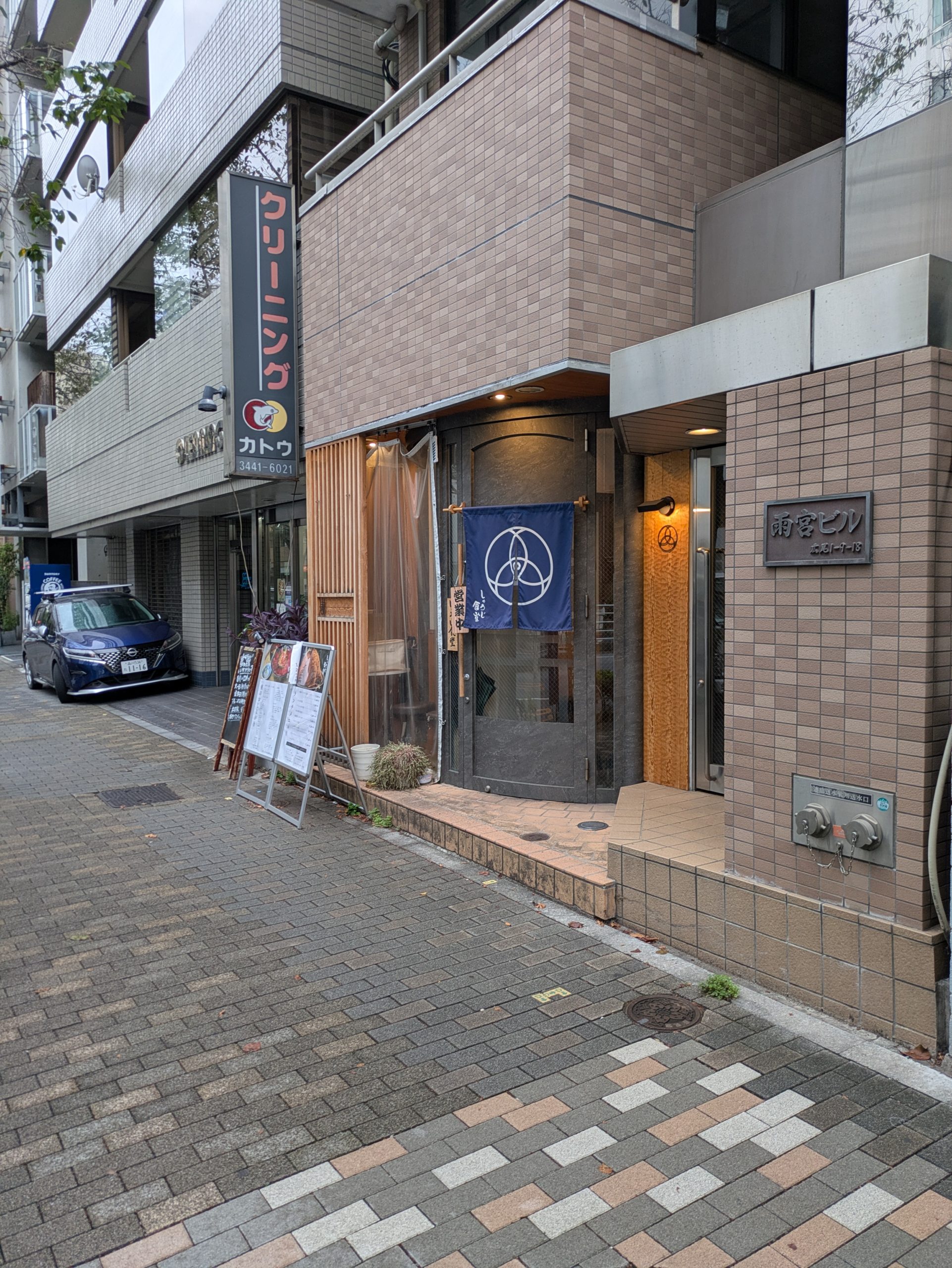
Here I am in Hiroo, walking along Meiji-dori, when I spot a small shokudō.
A shokudō is a classic Japanese diner or canteen, but this one looked different. It had the traditional noren (curtain) at the entrance, but the facade felt surprisingly Western and modern. Stepping inside, the interior was just as chic—bright white walls, three small tables, and a counter with six or seven seats. It felt bright, cozy, and not at all like your typical neighborhood eatery.
The menu offered another surprise. Despite the modern decor, the lineup was pure, classic Japanese cuisine with a heavy focus on fish. It was a “good mismatch,” as we say in Japan.
This is clearly a family-run spot. A husband works the kitchen while his wife manages the front of the house. Since it was a Saturday, their elementary-school-aged son was even helping out, bringing water and dishes to the tables. Seeing other families dining with their own young children, I could tell this was a beloved local haunt—a truly homey diner for the neighborhood.
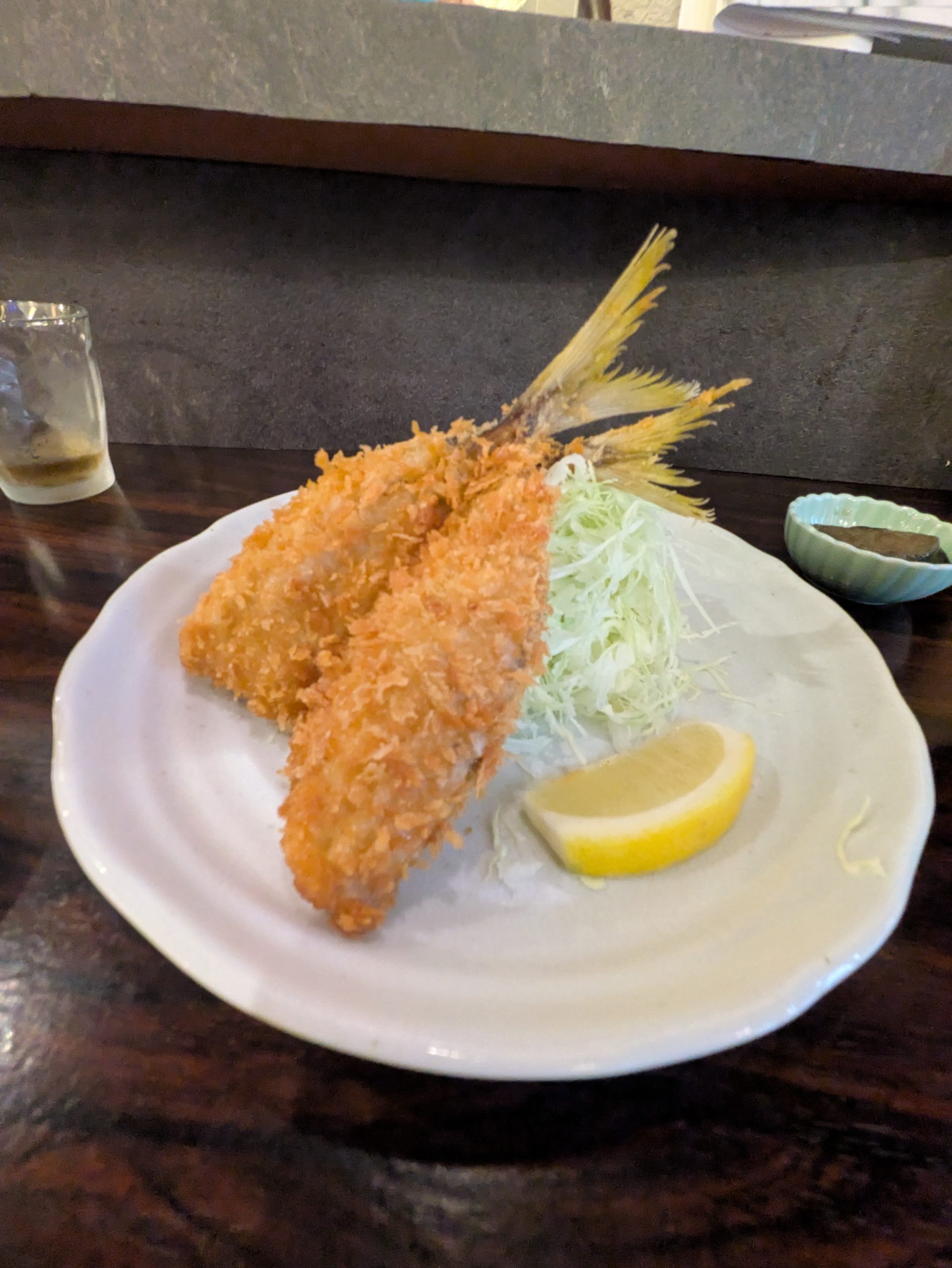
My eyes were drawn to the very first item on the lunch menu: the “Ultimate Aji Fry Teishoku” (究極のアジフライ定食). I had to order it.
 | |
When the set meal arrived, it was a work of art. The plating was beautiful, the colors vibrant and appetizing. The teishoku came with two large pieces of aji (Japanese horse mackerel). And a huge bonus for lunch: rice refills are free!
First, I squeezed some fresh lemon over a piece and took a bite on its own. It was so incredibly tender I could easily cut it with my chopsticks. The moment it hit my mouth, I got a perfect saku-saku (crispy) crunch from the panko, followed by an unbelievably light, fluffy (funwari) fish inside. The flavor of the mackerel was rich and distinct. It was, in a word, outstanding.
Next, I tried it with the provided Worcester-style sauce. It immediately transformed into the perfect okazu (a dish designed to be eaten with rice), adding a savory depth without overpowering the fish. This dish truly lived up to its “ultimate” name with its simple elegance.
Even the side dishes were exceptional. The shredded cabbage—I couldn’t tell if it was hand-cut or machine-sliced—was incredibly fine, giving it a soft, pleasant texture that was easy to eat. The fukusai (side dish) of nasu no nibitashi (simmered eggplant) was divine. It was creamy-soft with a refined, delicate seasoning. It wasn’t strong, but it had just enough flavor to make the rice disappear, leaving you wanting just one more bite.
Now, for the second piece of aji fry, I have a personal ritual: I use soy sauce.
I know many people are hard-wired to think “sauce with fried food,” but I urge you to break that habit. Since the crispy coating surrounds a piece of fish, adding soy sauce makes it taste remarkably similar to eating grilled fish with shoyu. The savory soy sauce perfectly complements the mackerel’s natural flavor, and combined with that fluffy, tender texture, it’s absolutely delicious.
Naturally, with free rice refills, I had one bowl of rice for each piece of aji fry and finished the entire set. It was a perfectly balanced, refined, and deeply satisfying teishoku.
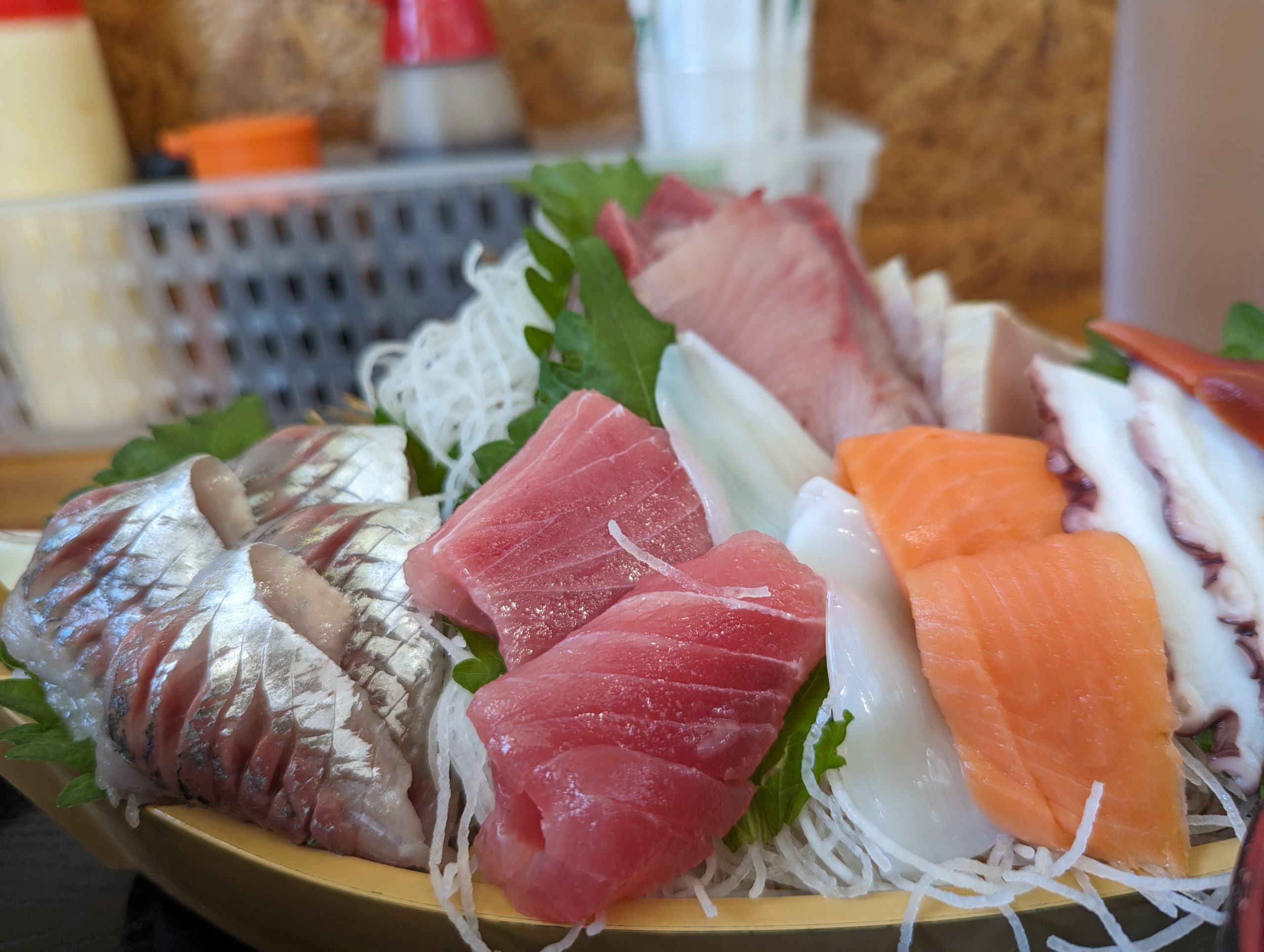
This modern shokudō is a true hidden gem in Hiroo. I’m already planning my next visit; I can’t wait to come back and try their simmered fish or sashimi. If you’re in Tokyo and looking for an authentic, high-quality Japanese lunch, this is one spot you shouldn’t miss.
投稿者

kirico99@gmail.com